Monday, 1 October 2012

Week 10, the event

Natural disasters
  • Landslide - the building would be totally shifted and would be collapses on the side closest to the location of the landslide. Rubble would pile at the bottom of the landslide. Old and torn newspaper clippings will hang on the walls describing the chaotic landslide while a fuzzy television repeatedly plays a news story covering the event.
  • Flood - the building's interior will have a swamp like appearance, the walls and floors will be covered in moss and forest vegetation. The marble will be damp stained. Animals such as flies and frogs will be abundant. Sand bags will be placed as a hint that a flood has occurred.

Interactivity
  • Soil where landslide located continuously falling down and tearing more of the building away, rubble sliding down edge or land form.
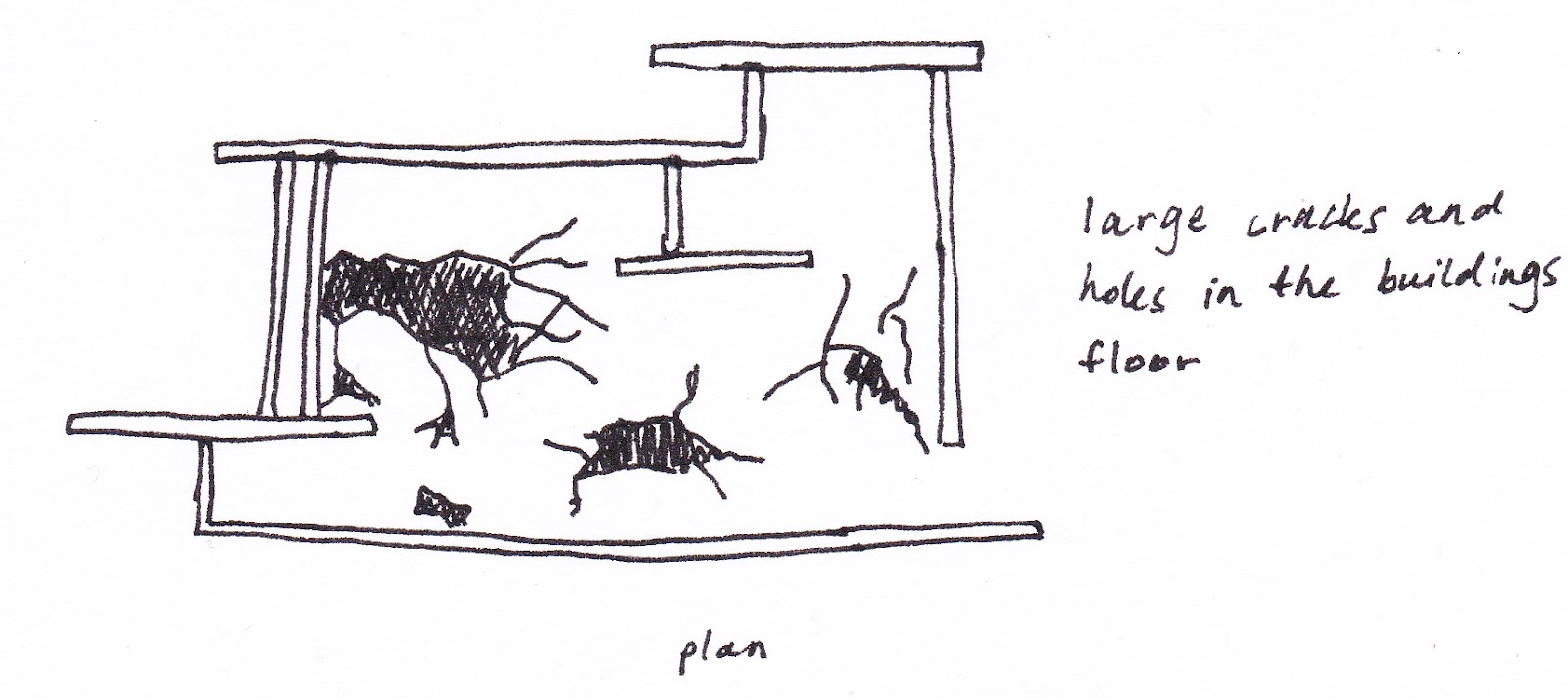
  • Floors cracking and starting to fall away as they are walked on.
  • Eerie sound effects of wind, dripping water and cracking or crumbling sounds.
  • Building floods more and more over time - water level rises until eventually the player is totally underwater and needs to swim.
  • Television image progressively gets weaker and more static until eventually stopping.

Week 10, decay sketches

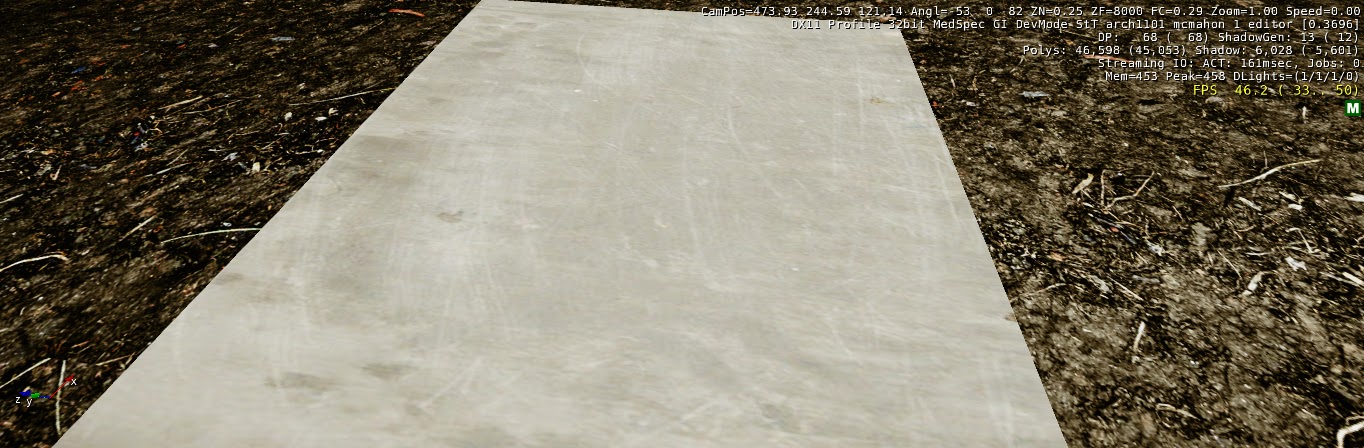
Week 10, decay reference images

Monday, 24 September 2012

Week 9, material research

Concrete

What is the process of making material?

Composed primarily of cement, aggregate and water. The cement consists of a variety of fine ground powders which harden when mixed with water.

How long will the material last for?

Life span differs depending on the strength of concrete and the environmental condition but generally it has a very long or even permanent service life.

What makes the material corrode?
Concrete corrodes by dissolution and cracking or crumbling due to tensile or compressive stress or environmental factors such as temperature variation (e.g. freezing) or exposure to chemicals. Rusting also occurs to steel in reinforced concrete.

What are the pros and cons of the material?

Pros: Fire resistant, generally weatherproof, strong in compression.
Cons: Temperature variation can cause cracking, weak in tension

What is the material typically used for?

Concrete it widely used in building for bridges, roads, walls, footings, floors, columns and beams.

What are the environmental impacts of the material?

Cement is a major producer of carbon dioxide and the hard surface of concrete can contribute to surface run off which can cause soil erosion and water pollution.


Marble

What is the process of making material?

Marble is a metamorphic rock.

How long will the material last for?

Marble is considered a permanent material.

What makes the material corrode?
Environmental conditions, in particular high levels of acidic gases (such as sulphur dioxide) causes marble to corrode. Oxidation can also cause marble to stain.

What are the pros and cons of the material?

Pros: Strong in compression, fire and heat resistant, waterproof.
Cons: Weak in tension

What is the material typically used for?

Marble is mostly used in flooring or bench tops.

What are the environmental impacts of the material?

As marble is a natural material it is bio-degradable and eco friendly.


Steel

What is the process of making material?

Steel is iron that has had the majority of impurities removed. Various metals are alloyed with the iron to create various characteristics.

How long will the material last for?

Long life span.

What makes the material corrode?
Condensing water and air causes steel to rust.

What are the pros and cons of the material?

Pros: Strong in both compression and tension, ductile.
Cons: Loses strength in extremely high temperatures.

What is the material typically used for?

Steel is widely used in architecture, bridges, roads, railways, vehicles and appliances.

What are the environmental impacts of the material?

Recyclable and reusable. 

Week 9, textures

Concrete
Before
After
  
 Marble
Before
After

Steel
Before
After

Monday, 17 September 2012

Week 8, the houses

Barcelona Pavilion
Mies van der Rohe
This could decay by having the large glass windows shatter and the thin walls crack, warp and lean over or even crumble in places, causing the roof to tilt. The floor tiles would over time become damp and mouldy, covered in moss and beginning to crack. The pool could become almost swamp like and their could be vegetation and vines growing over the entire building. You could also flood the pool and have the entire floor of the building take on an overgrown swamp appearance and have moisture dripping from the ceiling.


House at Bordeaux
Rem Koolhaas
The large glass panes could become shattered or severely cracked. Vines and vegetation could creep up the walls and through the holes on the top story into the interior. The position of whole stories could shifted giving the building a slant. Inside, furniture could be collapsed with cracked floors and ceilings, although the lift could still function, moving up and down on its own, with chunks of the the floor surrounding it crumbed or missing, so it appears as if the lift has smashed through the building suddenly. The smooth finish of steel posts will be matte and scratched and the exterior walls covered in dirt and rust.


Rudin House

Herzog & de Meuron
The base of the building will crumble away into a pile of rubble and dust. The walls and roof will crack and become mouldy and covered in moss. The glass in the windows will be cracked or totally shattered.


Sunday, 16 September 2012

Week 8, 3ds max to cryengine


Issues
  • Linking objects to dummy didn't work, had to group the objects instead, which seemed to have the same effect as what linking would have done so this was fine.